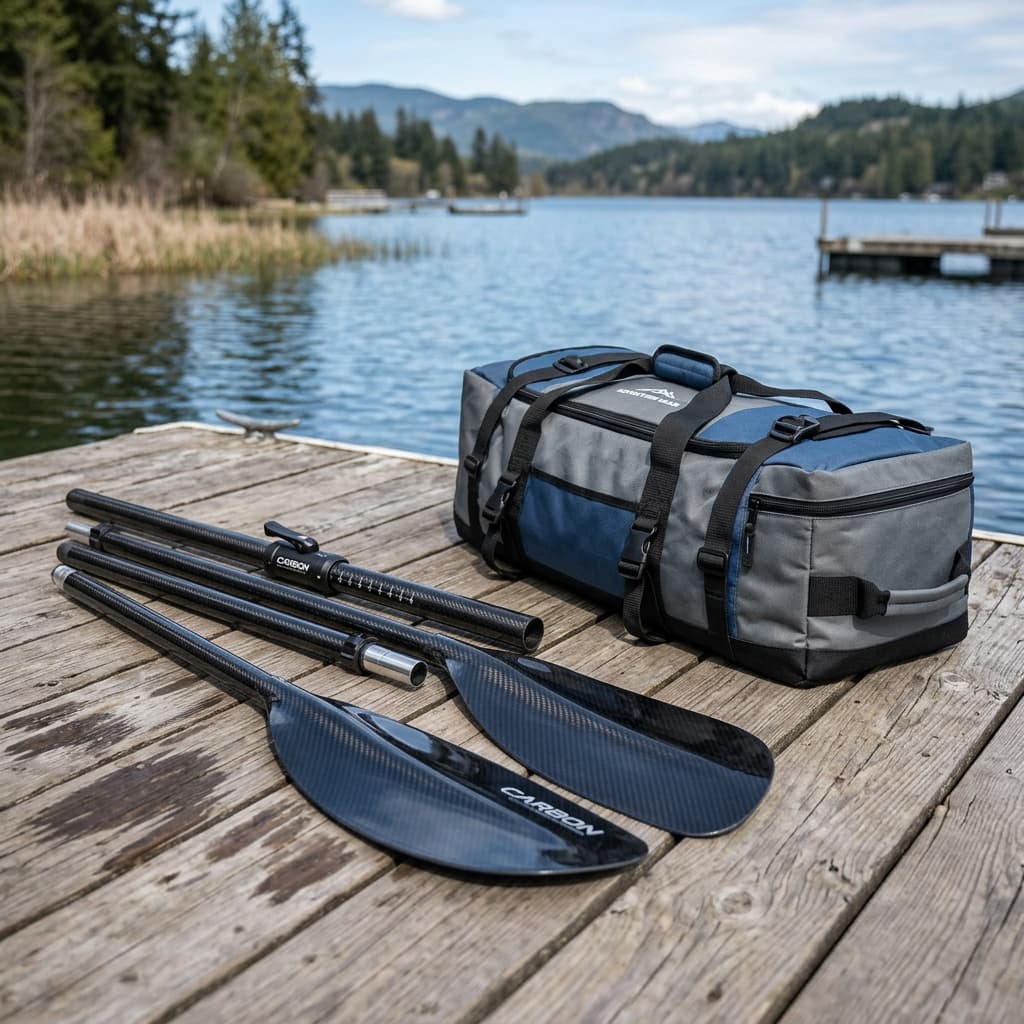
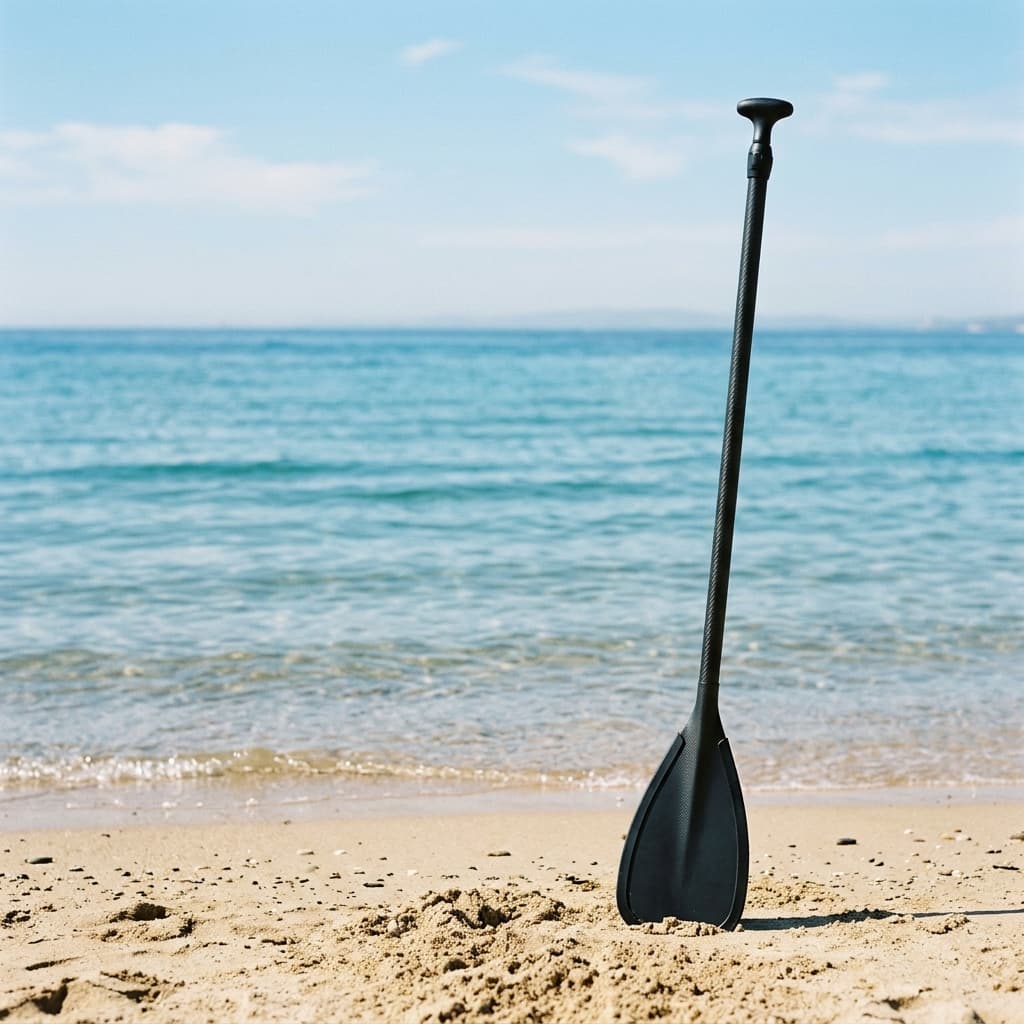
A heavy aluminum paddle causes shoulder fatigue by mile two. Carbon and fiberglass paddles weigh 8–14 oz less — an amount most paddlers notice within the first 20 minutes on the water. Five paddles ranked below by material, weight, and value.
✓ 5 paddles tested✓ Carbon vs fiberglass explained✓ Updated April 2026
Most boards ship with an aluminum paddle in the package. Aluminum works for a session or two, but it is the heaviest option in the category and its weight compounds across thousands of strokes. Arm and shoulder fatigue arrives noticeably earlier than it does with carbon or fiberglass.
The weight difference between a quality carbon paddle and a standard aluminum is typically 8–14 oz. That gap feels minor in a shop but becomes obvious after 90 minutes of paddling. Five paddles below cover every price tier from $99 to $280.
Top 5 SUP Paddles for 2026
#1 PickWerner Paddles Camano — Best Overall SUP Paddle(~$280)
#2 PickAqua Bound Manta Ray Carbon — Best Full Carbon at a Reasonable Price(~$230)
#3 PickBending Branches Whiskey Carbon — Best for Touring and Distance Paddling(~$250)
#4 PickBOTE Rover Aero Carbon — Best Brand-Matched Paddle for BOTE Boards(~$199)
#5 PickGili Sports Carbon Fiber Paddle — Best Budget Entry into Carbon(~$99)
Five specifications that determine whether a paddle reduces fatigue or compounds it.
Material: Carbon vs Fiberglass vs Aluminum
Aluminum paddles (20–30 oz) are the heaviest and cause fatigue fastest. Fiberglass paddles (22–28 oz) cut weight significantly and maintain rigidity better. Carbon paddles (20–24 oz) are the lightest and stiffest — the performance benchmark. Every step up in material is noticeable in the water.
Paddle Weight
A typical paddler completes 1,200–1,500 strokes per mile. Over a 3-mile session, a 4 oz heavier paddle adds roughly 12 lbs of total cumulative lift. This translates directly to shoulder and arm fatigue. Lighter paddles are not a luxury — they are a performance specification.
Blade Shape: High-Angle vs Low-Angle
High-angle blades are wider and designed for aggressive, vertical strokes — suited for racing and fitness paddlers. Low-angle blades are narrower, require a more diagonal stroke, and are far more efficient for recreational and touring use. Most paddlers benefit from low-angle. Only buy high-angle if you specifically want the workout.
Adjustability: Fixed vs 2-Piece vs 3-Piece
Fixed paddles offer the best rigidity and no connection-point flex — reserved for performance paddlers with a perfectly fitted length. 2-piece paddles adjust for height with minimal flex penalty — the best balance for most buyers. 3-piece paddles pack smallest for travel but introduce the most flex at joints.
Sizing: How to Pick the Right Length
A general rule: your paddle should be 8–10 inches taller than you. Surf and yoga SUPers often prefer shorter paddles. Flatwater and touring paddlers often go longer. Most 2-piece and 3-piece paddles adjust across a range, giving you room to experiment before committing to a fixed length.
Werner Paddles is the name you see most often in the hands of instructors, guides, and experienced paddlers. The Camano is the paddle that earned that reputation. The fiberglass blade construction hits the right balance — lighter than aluminum by a noticeable margin, stiffer than cheaper fiberglass designs, and durable enough for regular multi-hour use without the flex fatigue that lower-grade paddles develop mid-season.
The low-angle blade design is purpose-built for recreational and touring paddlers. It generates smooth, efficient power strokes with significantly less shoulder strain over distance compared to high-angle racing designs. If you plan to paddle for more than an hour at a time, low-angle is almost always the right choice.
At 22 oz, the Camano is light enough that you will notice the difference from your first session. Most paddlers dramatically underestimate how much paddle weight affects endurance — every lift of a heavier paddle multiplies across thousands of strokes. The Werner Camano is the standard against which all other paddles in this guide are measured.
Pros
The most widely used brand among instructors and experienced paddlers
Fiberglass blade delivers excellent stiffness-to-weight ratio
Low-angle design reduces shoulder strain over long sessions
22 oz — noticeably lighter than mid-range fiberglass alternatives
Cons
Higher price than mid-tier carbon paddles from lesser-known brands
Fiberglass (not full carbon) — slightly heavier than carbon-only alternatives like the Aqua Bound
Bottom line: The Werner Camano is the right answer for paddlers who want the best all-around paddle without going to full carbon pricing. Excellent long-session comfort and a brand that holds its value.
Material: Full CarbonWeight: 20 ozBlade: Low-AngleDesign: 2-Piece Adjustable
The Aqua Bound Manta Ray Carbon delivers full carbon construction — blade and shaft — at a price point well below what full-carbon paddles typically command. At 20 oz, it is the lightest paddle in this comparison, and the all-carbon build eliminates the flex that mixed fiberglass/carbon paddles still exhibit under hard strokes.
The low-angle blade shape matches the Werner Camano's recreational touring orientation. Two-piece adjustable design accommodates paddlers of different heights, making it a strong choice for households with multiple paddlers. The carbon shaft maintains its rigidity even in cold water, which causes some competing carbon blends to feel slightly more flexible.
Pros
Full carbon construction — lightest paddle in this comparison at 20 oz
Sub-Werner pricing makes full carbon accessible
2-piece adjustable for households with multiple paddlers
Low-angle blade keeps shoulder strain low over long sessions
Cons
Less brand recognition than Werner among serious paddlers
Carbon requires more careful handling to avoid blade chip at the edges vs fiberglass
Bottom line: The Aqua Bound Manta Ray Carbon is the right upgrade path for paddlers coming from aluminum who want the full weight advantage of carbon without the highest price tier.
Bending Branches is a respected mid-tier paddle brand with a strong focus on touring design. The Whiskey Carbon is built for paddlers who take long-distance sessions seriously — the carbon shaft maintains rigidity over extended repetitive strokes in a way that mixed-material paddles gradually lose.
The blade geometry leans toward touring efficiency: a slightly narrower surface area generates less resistance per stroke while maintaining power, which translates to better pace-per-effort over long distances. This pairs naturally with the Red Paddle Co Sport 11'3" reviewed on this site, which has the hull profile designed for exactly this kind of extended touring use.
Pros
Touring-optimized blade geometry for better efficiency over distance
Carbon construction at a competitive price
Natural pairing with performance touring boards like Red Paddle Co Sport
21 oz — lighter than most fiberglass alternatives at this price
Cons
Touring blade geometry is less suited to casual flatwater paddling than Werner or Aqua Bound
Bending Branches has less brand recognition than Werner
Bottom line: The right paddle for distance and touring paddlers. If your sessions regularly exceed an hour and you prioritize efficiency over casual comfort, the Whiskey Carbon is the pick.
The BOTE Rover Aero Carbon is the natural pairing for the BOTE Breeze Aero reviewed on this site. It is the paddle BOTE designs and tests alongside their boards, and the ergonomics and blade geometry reflect that matched development process.
The 3-piece construction is the most packable of any paddle in this comparison — it collapses to a size that fits within the BOTE carry bag alongside the board itself, making it the right choice for paddlers who travel with their board or need compact storage. Carbon construction at the $199 price point makes it strong value in the BOTE ecosystem.
Pros
Brand-matched to BOTE boards — ergonomics designed together
3-piece construction packs smallest of any paddle in this guide
Carbon at competitive price within the BOTE product range
The Gili Sports Carbon Fiber Paddle is the right answer for one type of buyer: someone who knows they want carbon but is not yet ready to commit to the Werner or Aqua Bound price tier. At $99, it is the most accessible entry into carbon construction in this comparison.
The tradeoffs are real: at 26 oz, it is the heaviest paddle in this guide despite its carbon construction — the blade composite is a lower-grade carbon blend that adds weight back. The connection points on the 3-piece design show more flex under hard strokes than the 2-piece designs at higher price tiers. For casual paddlers who want to reduce aluminum weight without the full investment, it works well in that role.
Pros
Lowest price carbon paddle in this comparison at ~$99
Meaningful weight reduction over aluminum entry-level paddles
3-piece design packs compactly for travel
Strong Amazon availability and highly reviewed at the price point
Cons
Heavier than all other paddles in this guide despite carbon label (26 oz)
More flex at connection joints than 2-piece premium alternatives
Bottom line: The right first step into carbon for budget-conscious buyers. Once you outgrow it, the Aqua Bound Manta Ray Carbon is the natural upgrade path.
A reliable starting point: your height plus 8–10 inches. For a 5'10" paddler, that suggests a 74–76 inch paddle. Touring and flatwater paddlers typically prefer the longer end; surf and yoga paddlers prefer shorter. Adjustable 2-piece paddles let you experiment across a range before committing to a fixed length.
Is a carbon paddle worth the money?
For most paddlers who go out more than once a month, yes. The weight difference between a carbon paddle and an aluminum entry-level paddle is typically 8–12 oz. Over a 3-mile session that difference accumulates to thousands of lighter lifts. Shoulder and arm fatigue is meaningfully lower, and session times can extend noticeably. The Aqua Bound Manta Ray Carbon at ~$230 is the strongest value entry point.
What's the difference between high-angle and low-angle SUP blades?
High-angle blades are wider and designed for a more vertical, powerful stroke — they generate more force per stroke and are favored by fitness and racing paddlers. Low-angle blades are narrower and require a diagonal stroke path, generating less force per stroke but consuming significantly less energy over distance. For recreational and touring users, low-angle is almost always the right choice.
Can I use a one-piece aluminum paddle?
Yes — most boards come with an included aluminum paddle, and they work. The limitations become noticeable with use: aluminum paddles are the heaviest option, typically 30–36 oz, and cause arm and shoulder fatigue significantly faster than carbon or fiberglass alternatives. They can't be disassembled for travel. An aluminum paddle is a good starting point; upgrading to carbon or fiberglass is a meaningful improvement.
How do I maintain a SUP paddle?
Rinse with fresh water after salt water use to prevent corrosion at the connection joints. Store disassembled and away from direct sunlight — UV exposure degrades carbon and fiberglass blade finishes over time. Avoid striking rocks or hard surfaces with the blade tip. Dry before storage to prevent mold at the rubber collar connections.