Choosing your first paddle board is harder than it should be. Most guides recommend the wrong specs for beginners, or pick boards that you will outgrow in a season. This guide identifies the three boards that actually build confidence — and explains the four criteria that make all the difference.
✓ Independent reviews✓ Real-world stability testing✓ No paid placements✓ Updated April 2026
In 2026, beginner-friendly inflatable paddle boards have never been better engineered. The challenge is not quality — it is sorting the boards designed for actual beginners from the ones that look appealing but are too narrow, too performance-oriented, or too cheaply built to support early learning effectively.
Most first-time buyers overestimate how much they care about speed and underestimate how much they care about not falling in. This guide is built around that reality: stability first, everything else second.
If you want the recommendation immediately, jump to the top three picks. If you are still evaluating what to look for, the buying guide below covers the six criteria that actually determine whether a beginner board works.
Top 3 Beginner Paddle Boards for 2026
Ranked by stability, beginner-friendliness, and long-term value.
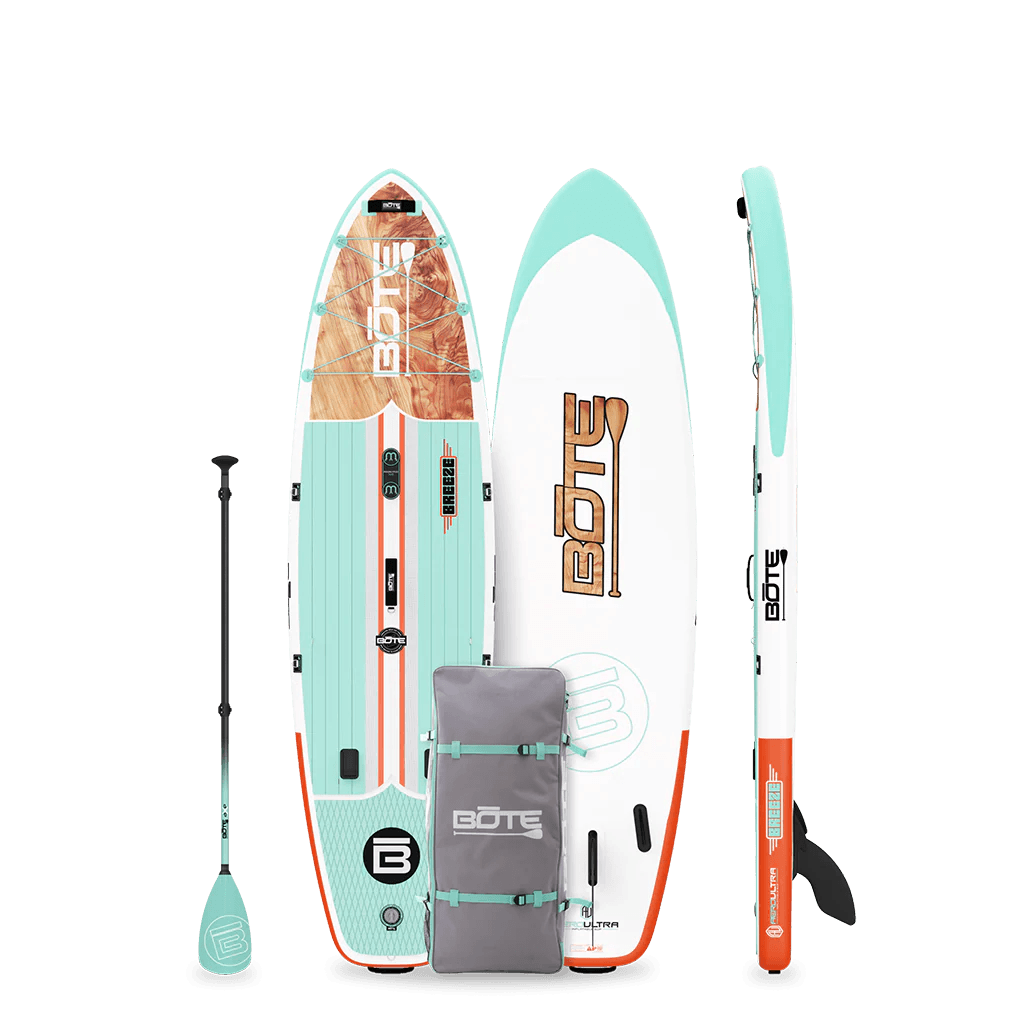
#1 PickBOTE Breeze Aero 10'8" — Best Overall for Beginners(~$899)
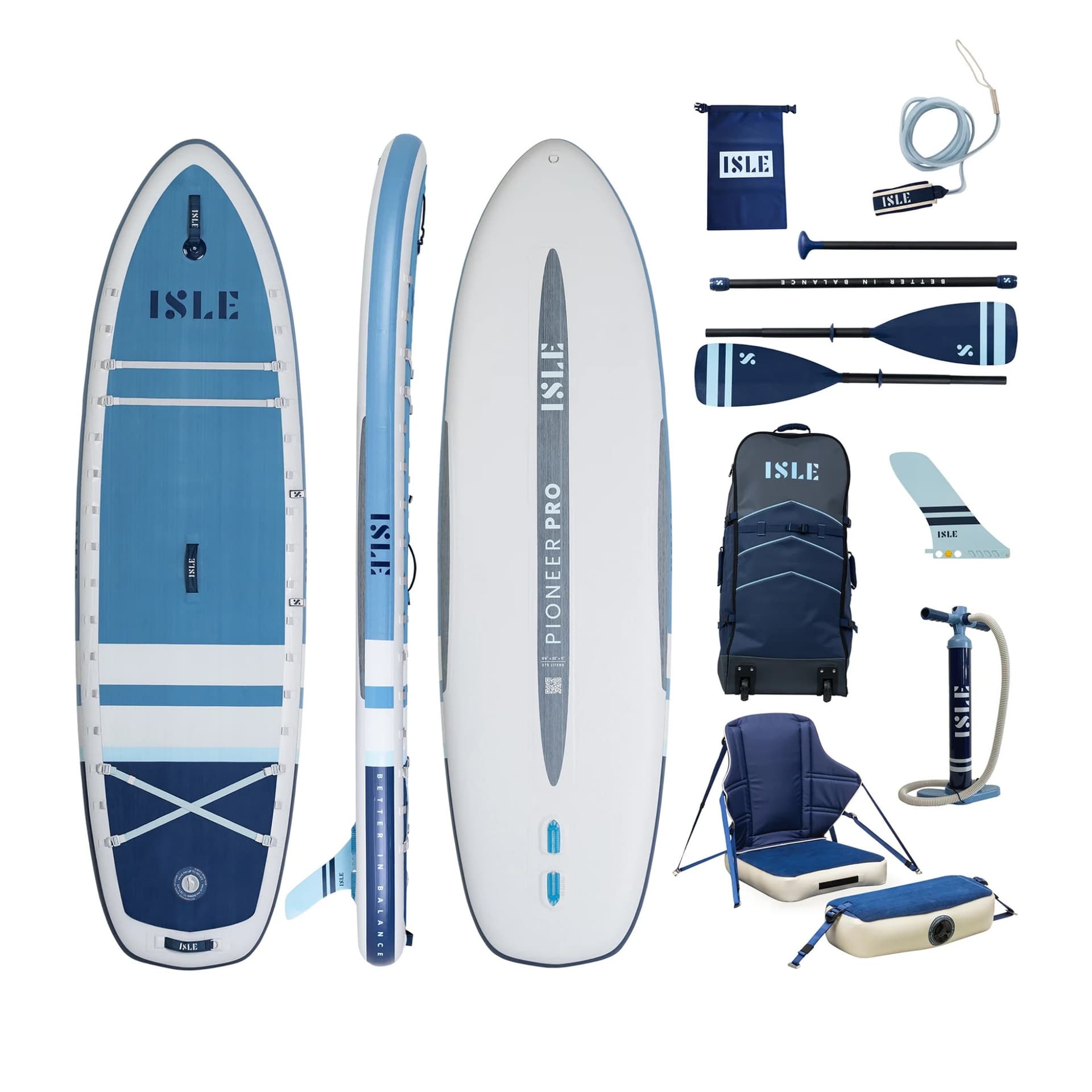
#2 PickIsle Pioneer 10'6" — Most Forgiving Beginner Board(~$749)
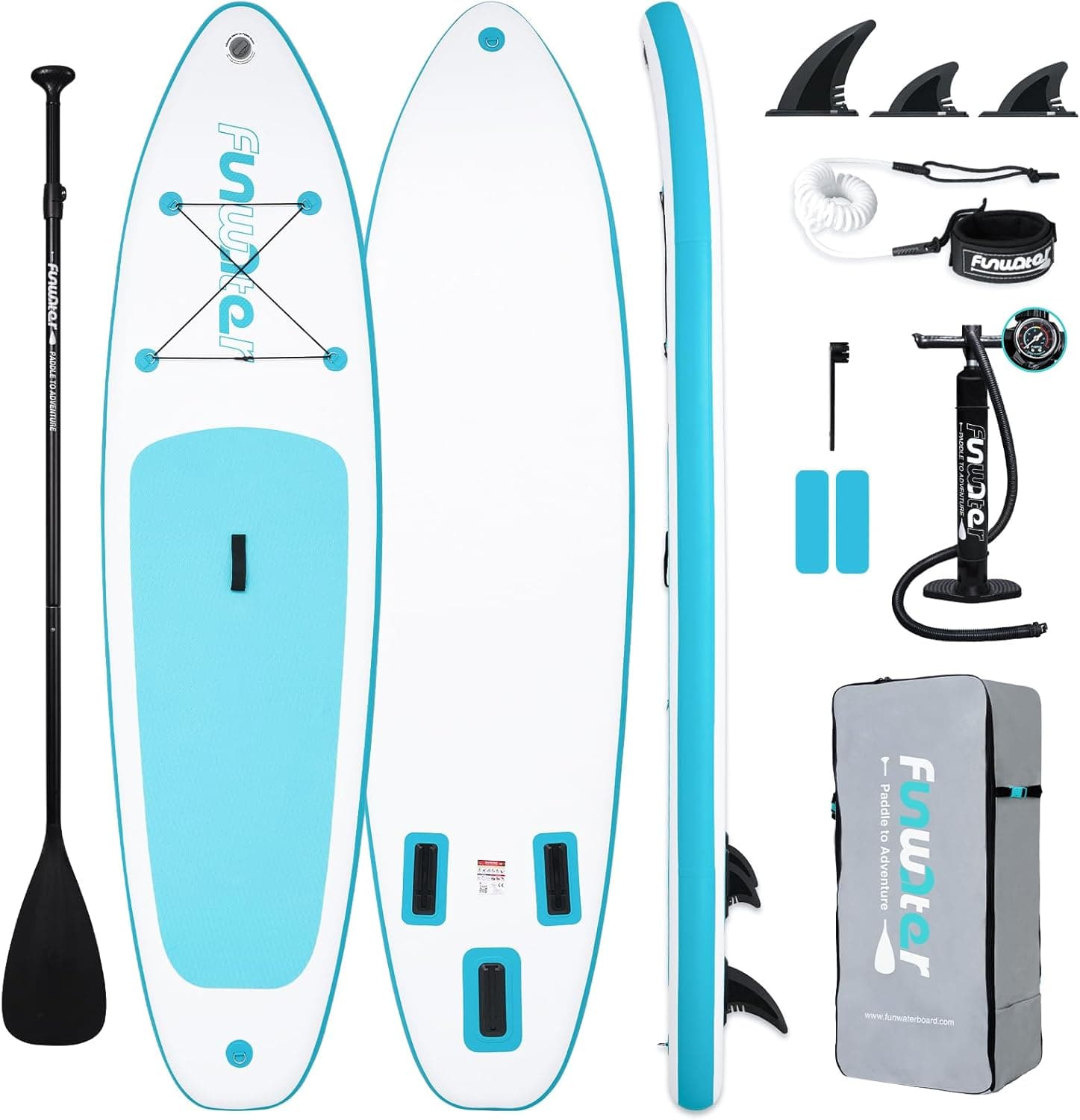
#3 PickFunWater Inflatable SUP 10'8" — Best Budget Entry for Beginners(~$149)
Most buying guides bury the most important criteria under lengthy brand histories and marketing language. Here are the six specifications that actually determine whether a beginner board works for you — in order of priority.
Width: 32 Inches or More
Width is the single most important stability factor for beginners. Look for a board at least 32 inches wide — ideally 33 inches. A wider board resists tipping when you shift your weight, and makes standing up the first time significantly easier. Narrow boards (30 inches or less) are designed for performance, not learning.
Thickness: 6 Inches
A 6-inch thick board creates more hull volume than a 4-inch board, which means better buoyancy and a higher, more stable platform. It also holds inflation pressure more consistently over a full session. Boards under 5 inches thick feel softer underfoot — which makes balancing more difficult, not easier.
Length: 10'6" to 11'6"
For most beginners, 10'6" to 11'6" is the ideal range. Shorter boards are more maneuverable and easier to transport. Longer boards track straighter and glide more efficiently but require more technique to turn. Start in the middle of this range and adjust as your skills develop.
Weight Capacity
Never buy a board rated exactly at your body weight. Aim for at least 50–100 lbs of capacity above your actual weight. A board operated at its limit sinks lower into the water and becomes noticeably less stable. Extra capacity headroom is extra stability — especially while you are still developing your balance and technique.
Construction Quality
Even for beginners, construction matters. Look for high-density drop-stitch cores and multi-layer PVC. Single-layer budget boards develop softness within months of regular use, which makes them harder to balance on over time. Premium boards stay rigid for multiple seasons.
What's Included
A complete beginner kit should include a high-volume pump, a padded carry bag, and a fin set. Boards that require you to buy these separately cost significantly more once you add the total. Factor in the complete cost before comparing prices across boards.
The 3 Best Beginner Paddle Boards for 2026
Full breakdowns of each board — what makes it suitable for beginners, where it excels, and who it is best matched to.
Best Overall#1 Pick
BOTE Breeze Aero 10'8"
Best Overall for Beginners — ~$899
The BOTE Breeze Aero is the board we recommend to most first-time buyers who ask "what board should I actually get?" It balances the stability beginners need with the construction quality and feature set that makes it worth keeping for years.
At 33 inches wide and 6 inches thick, the Breeze Aero provides the platform stability that new paddlers depend on during those first few sessions. The AeroULTRA construction keeps the hull rigid under pressure — which means the board behaves consistently whether you are paddling slowly or picking up pace. Boards that flex underfoot are harder to balance on; this one does not.
What makes it exceptional for beginners specifically is that it does not become obsolete as you improve. The MAGNEPOD accessory system lets you add gear as your use cases expand — fishing kit, yoga mat, water storage — without needing a new board. Most beginner boards get sold within two years when paddlers outgrow them. The Breeze Aero gives you a reason to keep it.
Pros
AeroULTRA construction maintains rigid platform beginners can balance on confidently
MAGNEPOD system means the board grows alongside your paddling skills
17.5 lbs — the lightest board in this guide, easy to carry solo to the water
All-around hull works on flatwater, rivers, and calm coastal paddling
Cons
300 lb weight capacity is lower than the Isle Pioneer
MAGNEPOD accessories purchased separately add to the total cost
Bottom line: The Breeze Aero is the beginner board that earns its keep long after the learning phase ends. Highest overall value for first-time buyers who want one board that lasts.
Includes paddle, pump, fins, carry bag, and optional kayak seat.
Most Forgiving#2 Pick
Isle Pioneer 10'6"
Most Forgiving Beginner Board — ~$749
The Isle Pioneer earns its reputation as one of the most popular beginner boards for one clear reason: it is genuinely forgiving. The wide, flat platform makes it harder to fall off, easier to stand up on, and more confidence-building than narrower designs.
Its high weight capacity means most paddlers are operating well below maximum load. A board paddled at 60–70% of its weight rating sits higher in the water, resists tipping more readily, and stays more responsive under shifting body weight. That extra margin of stability is exactly what beginners benefit from during the learning curve.
The construction is straightforward without unnecessary complexity. That simplicity is a real advantage here — fewer components to learn, fewer things to set up incorrectly, and a more durable everyday board that tolerates the minor abuse beginners inevitably deliver during the learning process.
Pros
Wider platform provides more initial stability than most boards at this price
High weight capacity keeps most paddlers well under the stability-compromising load limit
Simple, reliable construction with minimal setup complexity
Very competitive price point for the stability and quality on offer
Cons
Wider shape is less agile — progressive paddlers will feel the limitation sooner
Deck finish quality is a step below the BOTE Breeze Aero
Bottom line: The Isle Pioneer is the right answer if your primary concern is the most forgiving, confidence-building first experience possible. The widest, most stable board in this guide.
The FunWater is the right recommendation for one type of buyer: someone who wants to try paddle boarding before deciding whether they enjoy it enough to invest in a premium board. At this price, the FunWater removes the financial risk entirely.
On calm, protected water — a still lake, a slow river, a sheltered cove — it provides enough stability for a first-time paddler to stand, balance, and develop the basic technique. It inflates quickly, packs down small, and weighs little. Those basics are what matter if you are testing the sport with no commitment.
It is important to be honest about the limitations: build quality is below the BOTE and Isle by a significant margin. Expect lower pressure retention over time, a softer platform under load, and a board that will show wear faster than premium alternatives. If you paddle it twice a week through a full summer and want another season out of it, it may disappoint. For occasional calm-water use while you decide if paddling is for you, it is perfectly adequate.
Pros
Lowest entry cost in the beginner board category
Adequate for calm-water introductory use
Lightweight and straightforward to pack, carry, and store
Zero financial commitment to a sport you may not continue
Cons
Build quality and pressure retention below premium boards
Not suitable for open water, wind, or rough conditions
Softer platform makes technique development harder
Not a long-term board — expect to upgrade within a season of regular use
Bottom line: The FunWater makes sense as a trial purchase only. If you already know you will commit to the sport, the extra investment in BOTE or Isle pays for itself within one season.
Most first-time buyers make the same four mistakes. Each one makes the learning process harder than it needs to be.
Choosing a Board That Is Too Narrow
Boards under 31 inches wide look sleek but are designed for technique and performance, not beginners. The instability discourages new paddlers before they develop any confidence. Always prioritize width over length or shape for a first board.
Ignoring Weight Capacity
A board paddled at maximum capacity sits lower in the water and tips much more easily. New paddlers frequently underestimate how much capacity headroom affects real-world stability. Check your weight, add any gear you plan to carry, and leave at least 60–80 lbs of margin.
Prioritizing Speed Over Stability
Racing-oriented and touring boards look impressive but have narrower, more performance-tuned hulls. They require established balance and technique to use effectively. Every hour spent fighting instability on the wrong board is an hour not spent actually learning to paddle.
Buying an Unknown Brand for the Lowest Price
Boards from unvetted brands at very low price points frequently have poorly bonded seams, inadequate pump quality, and drop-stitch cores that lose pressure within months. A board that deflates or develops rail softness mid-session will end your session early and discourage you from continuing. The FunWater is the lowest-cost board we recommend — below that price range, quality becomes unreliable.
Frequently Asked Questions
What is the best paddle board for beginners in 2026?
The BOTE Breeze Aero is the best overall beginner paddle board in 2026. It provides the stability beginners need with the construction quality and accessory compatibility (MAGNEPOD) that prevents it from becoming obsolete as your skills develop. For the most forgiving, budget-conscious entry, the Isle Pioneer is the strongest alternative.
What size paddle board is best for beginners?
For most beginners, a board 10'6" to 11' long, at least 32 inches wide, and 6 inches thick provides the best combination of stability, maneuverability, and buoyancy. Width matters more than length for initial stability — never sacrifice width for a sleeker profile as a first-time buyer.
How much should a beginner spend on a paddle board?
Beginners who are committed to the sport should budget $700–$900 for a board like the BOTE Breeze Aero or Isle Pioneer. These boards last multiple seasons and grow with your skill level. Spending less on a budget board under $300 can make the learning process harder, as softer platforms are more difficult to balance on. If you are genuinely unsure whether you will continue, the FunWater at ~$149 removes the financial risk.
Are inflatable paddle boards good for beginners?
Yes — inflatable paddle boards are ideal for beginners. They are easier to transport, store, and protect against damage than hardboards. Premium inflatables from BOTE and Isle are rigid enough at full inflation that new paddlers receive no meaningful performance disadvantage compared to hardboards, while gaining significantly easier portability and storage.
What is the most important thing to look for in a beginner paddle board?
Width. A board at least 32 inches wide is the single most important specification for beginner stability. All other factors — length, construction, accessories — matter, but no amount of build quality compensates for a platform that is too narrow for a new paddler to balance on comfortably.
Related Guides
Ready to go deeper? These guides cover the next most common questions once you have settled on a first board.